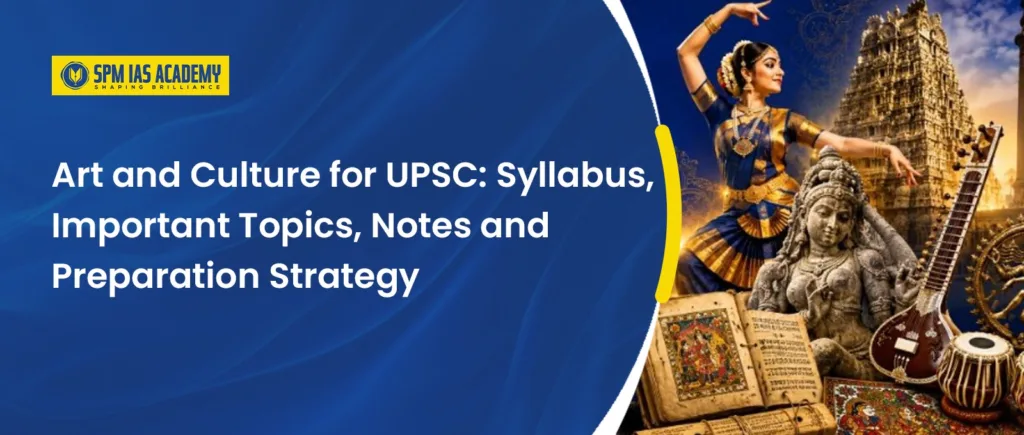
Art and Culture for UPSC is an important part of the Civil Services Examination. It helps aspirants understand India’s heritage, architecture, paintings, dance forms, music, literature, religions, philosophy and cultural traditions. UPSC asks questions from this area in both Prelims and Mains. Therefore, a clear and smart preparation plan can help students score better.
Many aspirants find this subject difficult because it has many facts. However, the subject becomes easy when you study it topic by topic. You do not need to memorise everything blindly. Instead, you should understand the background, features, examples and current relevance of each topic.
This guide explains the Art and Culture for UPSC syllabus, important topics, best sources, note-making method and revision strategy.
Students seeking expert guidance can explore UPSC coaching in Assam for comprehensive civil services preparation.
What is Art and Culture for UPSC?
Art and Culture for UPSC covers the study of India’s cultural development from ancient times to the modern period. It includes art forms, literature, architecture, sculpture, paintings, music, dance, festivals, religions, philosophy, and heritage sites.
UPSC coaching in north east India helps aspirants build strong fundamentals for Prelims and Mains.
The subject is not only about facts. It also helps aspirants understand how Indian society developed over time. For example, temple architecture tells us about religion, economy, society, and political patronage. Similarly, Buddhist art shows India’s cultural links with Asia.
So, while preparing this subject, students should connect facts with history and society.
Art and Culture Syllabus for UPSC
In UPSC Mains GS Paper 1, Indian culture covers the important aspects of art forms, literature and architecture from ancient to modern times. Although the syllabus looks short, its coverage is wide.
Candidates preferring regional language preparation can explore APSC in Assamese for better conceptual understanding.
The major areas include:
| Topic |
| Indian Architecture |
| Indian Sculpture |
| Indian Paintings |
| Classical Dance Forms |
| Folk Dance and Music |
| Literature |
| Religions and Philosophy |
| Buddhism and Jainism |
| UNESCO World Heritage Sites |
| Cultural Institutions |
| Festivals and Traditions |
| GI Tags and Cultural Current Affairs |
This topic-wise division helps aspirants prepare in a systematic way.
Why is Art and Culture Important for UPSC?
Art and Culture for UPSC is important because UPSC regularly asks questions from this area. In Prelims, questions often come from temple architecture, Buddhist monuments, paintings, classical dances, UNESCO sites and cultural institutions.
In Mains, the questions are usually analytical. UPSC may ask about cultural diversity, preservation of heritage, contribution of ancient dynasties or the importance of traditional art forms.
This subject also improves essay writing. You can use cultural examples while writing essays on Indian society, heritage, diversity, tourism and soft power.
For APSC and State PCS aspirants, this subject is equally useful. Assam-specific topics like Sattriya dance, Majuli, Ahom architecture, manuscripts, folk traditions and tribal culture can add strong value to answers.
How to Prepare Art and Culture for UPSC?
The best way to prepare Art and Culture for UPSC is to follow a simple three-step method.
- First, build a base with NCERTs. Start with Class 11 and Class 12 Fine Arts books. These books explain the subject in simple language.
- Second, use one standard reference book or trusted coaching notes. Do not collect too many sources. Too many books create confusion.
- Third, revise through short notes, maps, tables and previous year questions. This subject needs repeated revision because many facts are easy to forget.
Important Architecture Topics for UPSC
Architecture is one of the most important parts of Art and Culture for UPSC. Students should prepare it with proper examples.
Important areas include:
- Indus Valley Architecture: Town planning, drainage system, Great Bath and granaries.
- Buddhist Architecture: Stupa, Chaitya, Vihara, Sanchi Stupa, Bharhut, Amaravati and rock-cut caves.
- Temple Architecture: Nagara, Dravida and Vesara styles.
- Indo-Islamic Architecture: Arches, domes, minarets, tombs, forts and garden-style architecture.
- Mughal Architecture: Humayun’s Tomb, Fatehpur Sikri, Red Fort and Taj Mahal.
When you study architecture, focus on features, examples and patronage. This helps in both Prelims and Mains.
Temple Architecture for UPSC
Temple architecture is a high-yield topic. UPSC often asks questions on Nagara, Dravida and Vesara styles.
- Nagara Style: It developed mainly in North India. Its main feature is the curvilinear shikhara. Important examples include Khajuraho temples and Konark Sun Temple.
- Dravida Style: It developed in South India. Its main features include vimana, gopuram and enclosed temple complexes. Important examples include Brihadeshwara Temple and Meenakshi Temple.
- Vesara Style: It combines features of Nagara and Dravida styles. Important examples include Hoysala temples and Pattadakal temples.
Make a small comparison table for these styles. It will help you revise faster before Prelims.
Indian Paintings for UPSC
Indian paintings are another important part of Art and Culture for UPSC. Students should prepare both ancient and folk paintings.
Important topics include Ajanta paintings, Mughal paintings, Rajput paintings, Pahari paintings, Tanjore paintings, Madhubani art, Warli art, Pattachitra, Kalamkari and Kalighat paintings.
For each painting style, remember four things: region, theme, features and examples. This method reduces confusion and improves recall. Moreover, candidates should be aware of current affairs related to Indian paintings. For example, recently Raja Ravi Verma and his Krishna and Yashoda painting was in the news.
Classical Dance Forms for UPSC
Classical dance forms are frequently asked in UPSC and State PCS exams. India has eight recognised classical dance forms:
| Dance Form | State |
| Bharatanatyam | Tamil Nadu |
| Kathak | Uttar Pradesh |
| Kathakali | Kerala |
| Mohiniyattam | Kerala |
| Kuchipudi | Andhra Pradesh |
| Odissi | Odisha |
| Manipuri | Manipur |
| Sattriya | Assam |
Sattriya is especially important for APSC aspirants. It is linked with the Vaishnavite tradition of Assam and the Sattra institution.
How to Make Art and Culture Notes for UPSC?
Good notes make Art and Culture for UPSC easier. Prepare topic-wise notes instead of long paragraphs.
Make separate notes for architecture, sculpture, paintings, dance, music, literature, religions and heritage sites. Use tables wherever possible. Add one or two examples under every topic.
For example, under “Nagara Style,” write features and examples in bullet form. Under “Buddhist Architecture,” write stupa, chaitya, vihara and key examples.
Keep your notes short. You should be able to revise them quickly before the exam.
How to Link Art and Culture with Current Affairs?
UPSC often links static topics with current events. So, you should track cultural news regularly.
Focus on UNESCO World Heritage Sites, GI tags, archaeological discoveries, cultural festivals, museum developments, Ministry of Culture initiatives and new heritage recognitions.
For example, if a site enters the UNESCO list, revise its location, period, features and historical importance. This method improves Prelims accuracy and Mains answer quality.
Most Important Topics Art and Culture for UPSC Prelims
Before the exam, give extra attention to:
- Temple architecture
- Buddhist architecture
- Jainism and Buddhism
- Classical dances
- Indian paintings
- Indian music
- UNESCO World Heritage Sites
- GI tags
- Cultural institutions
- Religious philosophy
- Archaeological discoveries
- Folk traditions
These topics appear regularly in UPSC and State PCS examinations.
Conclusion
Art and Culture for UPSC is not difficult if you prepare it in a structured way. Start with NCERTs. Use limited sources. Make short notes. Connect static topics with current affairs. For UPSC, APSC and State PCS aspirants, this subject offers a strong scoring opportunity. It also helps in Mains answers, essays and interviews. With the right strategy, Art and Culture for UPSC can become one of the most interesting and rewarding parts of your preparation.
Frequently Asked Questions.
The best way is to start with Fine Arts NCERTs, use one standard reference book, make short notes and revise regularly.
Yes. UPSC often asks questions from architecture, paintings, dance forms, Buddhism, Jainism, UNESCO sites and cultural institutions.
APSC aspirants should study the general UPSC syllabus and add Assam-specific topics like Sattriya dance, Majuli, Ahom monuments, manuscripts and folk traditions.
Yes. Art and Culture helps in GS Paper 1, Essay and even Interview. Good cultural examples can improve answer quality.

Behind every article at SPM IAS Academy is a team of skilled content writers and subject experts committed to making preparation easier for aspirants. From answering common doubts to breaking down complex issues and current affairs, we create content that is accurate, easy to understand, and directly useful for UPSC, APSC, and other competitive exams.