
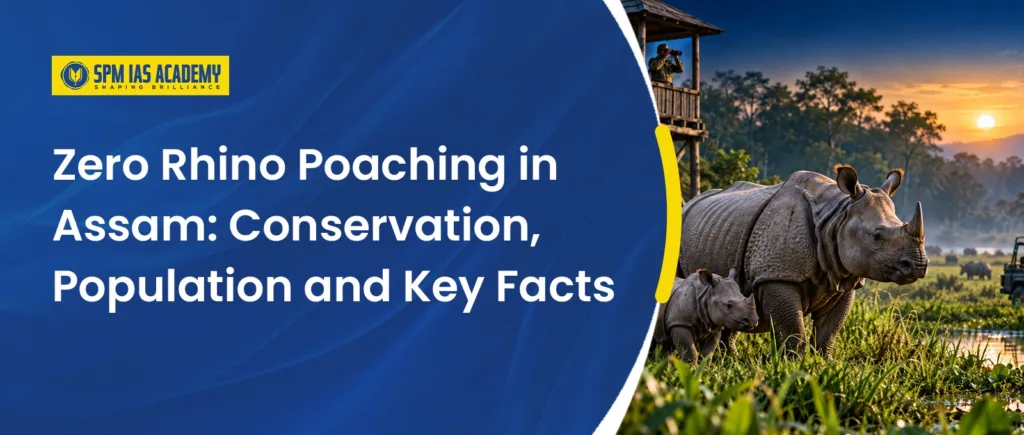
Zero Rhino Poaching in Assam marks a significant development in wildlife conservation. Assam recorded zero known rhino poaching incidents in 2025, highlighting the role of anti-poaching measures, surveillance systems, and community participation. Moreover, Assam is home to nearly 80% of the world’s greater one-horned rhinoceros population, making it a key centre for global rhino conservation. For aspirants wondering how to crack APSC in first attempt, such Assam-specific Environment and Ecology developments can be included in current-affairs notes and connected with the relevant APSC syllabus topics.
The milestone of zero rhino poaching is important. The protected areas like Kaziranga National Park, Manas National Park, Orang National Park and Pobitora Wildlife Sanctuary play a crucial role in protecting the species.
For UPSC, APSC and other State PCS examinations, this topic is important under Environment and Ecology (GS Paper 3). It is related to topics like wildlife conservation, protected areas, biodiversity and government initiatives.
In this article, you will learn about Assam’s rhino population, anti-poaching strategies, Project Rhino, conservation challenges and the future of rhino protection.
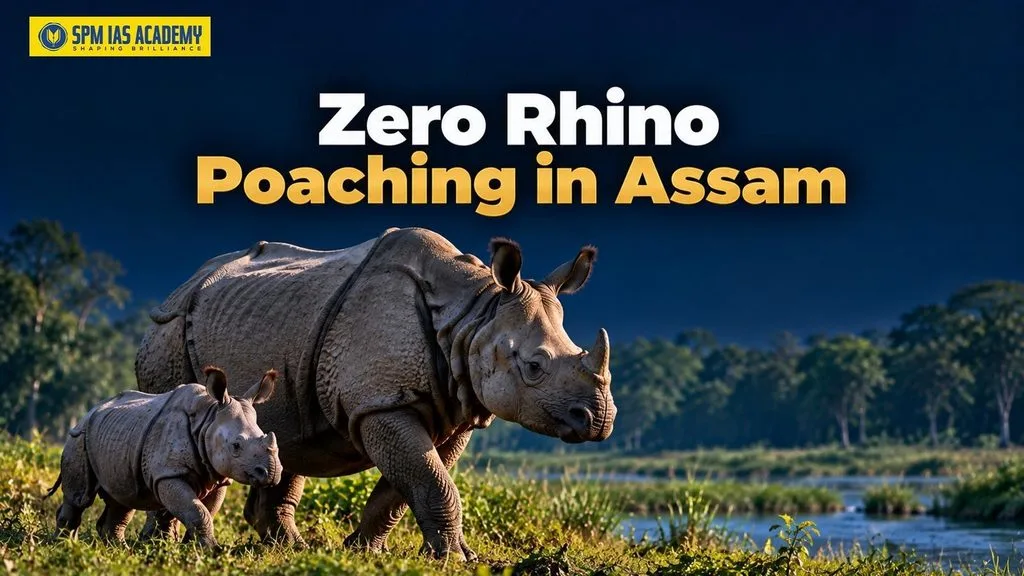
Why Is Zero Rhino Poaching Assam in the News?
The issue of rhino poaching in Assam gained attention around World Rhino Day 2026. Assam reported zero rhino poaching incidents in 2025, making 2025 only the second such year since the 1970s; the first was 2022.
The state also reported 3,260 rhinos, against an estimated global population of 4,075. This places Assam at the centre of global conservation efforts for the greater one-horned rhinoceros. For civil services aspirants, such figures are relevant to Environment, Ecology, biodiversity, and Assam-specific current affairs. UPSC coaching in the Northeast can provide structured preparation for these regional and national topics.
Assam Rhino Population and Global Significance
The greater one-horned rhinoceros (Rhinoceros unicornis) has made a significant recovery from historical population declines.
- According to the figures reported in September 2026, global population was about 4,075 and in Assam, the population of rhino was about 3,260.
- Therefore, Assam shares nearly 80% of the global population. Furthermore, within Kaziranga, there are around 2600 rhinos. These figures make Assam a critical landscape for the long-term survival of the species.
- The Indian rhinoceros is currently listed as Vulnerable on the IUCN Red List. Therefore, protecting Assam’s population remains important for global species conservation.
What Has Helped Assam Achieve Zero Rhino Poaching?
Assam’s recording of zero rhino poaching reflects several conservation measures rather than a single intervention. These include strengthened surveillance, anti-poaching operations, habitat protection, intelligence gathering, and cooperation with local communities. Students preparing for competitive examinations can also explore a Guwahati IAS academy for structured guidance on Assam-specific Environment, Ecology, and current-affairs topics.
- Strong anti-poaching enforcement: Forest personnel and law-enforcement agencies have strengthened surveillance and coordinated their operations. Assam’s experience shows how frontline protection can reduce wildlife crime when agencies work together.
- Surveillance technology: Moreover, improved surveillance technology has helped authorities monitor vulnerable habitats and respond to threats. The International Rhino Foundation’s 2026 report linked Assam’s progress to integrated law enforcement, frontline vigilance and community-centred conservation.
- Community participation: Local communities also play an important role in protecting wildlife habitats. Furthermore, community participation can improve intelligence gathering, reduce human-wildlife conflict and strengthen support for conservation.
- Habitat protection: Finally, authorities must protect the grasslands, wetlands and floodplain habitats that sustain rhino populations. Conservation therefore requires both anti-poaching action and habitat management.
Project Rhino: A New Conservation Initiative
On World Rhino Day 2026, Prime Minister Narendra Modi announced the initiation of Project Rhino. The initiative will provide financial and technical support to states that host the greater one-horned rhinoceros. For aspirants preparing for civil services examinations, live UPSC online classes Guwahati can provide structured support for covering current affairs, Environment, Ecology, and Assam-specific topics.
The initiative focuses on:
- Rhino protection
- Habitat management
- Genetic improvement
- Population monitoring
- Scientific understanding of population dynamics
Project Rhino therefore aims to strengthen conservation across the species’ range rather than focusing only on individual protected areas.
World Rhino Day 2026 Theme
The official theme of World Rhino Day 2026 was “Keep the Five Alive.” It highlights the conservation of the world’s five surviving rhino species:
- Greater one-horned rhinoceros
- White rhinoceros
- Black rhinoceros
- Javan rhinoceros
- Sumatran rhinoceros
The conservation status differs considerably among these species. The greater one-horned rhinoceros is classified as Vulnerable, while the black, Javan and Sumatran rhinos remain Critically Endangered.
What are the Challenges for Assam in Rhino Conservation?
- Habitat loss: Expansion of agriculture, settlements and infrastructure reduces suitable rhino habitats.
- Human-wildlife conflict: Moreover, increasing interaction between rhinos and local communities can lead to crop damage and conflict situations.
- Flood-related challenges: Assam’s flood-prone landscape affects grasslands and wetlands, which are important habitats for the greater one-horned rhinoceros.
- Habitat fragmentation: Development activities can divide wildlife corridors and restrict animal movement between protected areas.
- Wildlife trafficking: Although Assam has achieved periods of zero rhino poaching, illegal wildlife trade remains a long-term threat.
- Invasive plant species: Furthermore, invasive vegetation can reduce the availability of natural grasslands required by rhinos.
- Limited habitat expansion: Growing rhino populations require additional protected spaces and suitable habitats for long-term conservation.
- Climate change impact: Changing rainfall patterns and extreme weather events can affect wetland ecosystems and wildlife habitats.
- Maintaining genetic diversity: Therefore, conservation programmes must focus on scientific monitoring, habitat management and controlled rhino translocation.
- Community participation: Finally, Assam needs continued cooperation from local communities to strengthen wildlife protection and reduce conservation-related conflicts.
Conclusion
Assam’s zero rhino poaching record highlights the importance of strong enforcement, habitat protection, technology and community participation. Moreover, Assam’s large share of the global greater one-horned rhino population gives its conservation efforts international significance. Project Rhino can further strengthen protection, habitat management and scientific monitoring across rhino-range states.
Read More:
Source:
Frequently Asked Question
1. Why is Zero Rhino Poaching in Assam important for wildlife conservation?
Assam’s record of zero rhino poaching highlights the success of anti-poaching measures, technology-based surveillance and community participation. Moreover, it strengthens the conservation of the greater one-horned rhinoceros.
2. How many rhinos are found in Assam?
Assam has around 3,260 greater one-horned rhinoceroses, which accounts for nearly 80% of the global population. Therefore, Assam plays a crucial role in global rhino conservation.
3. What is Project Rhino launched for?
Project Rhino was launched to support rhino-hosting states through financial and technical assistance. It focuses on rhino protection, habitat management, genetic conservation and scientific population monitoring.

Behind every article at SPM IAS Academy is a team of skilled content writers and subject experts committed to making preparation easier for aspirants. From answering common doubts to breaking down complex issues and current affairs, we create content that is accurate, easy to understand, and directly useful for UPSC, APSC, and other competitive exams.