India’s Public Distribution System (PDS) is one of the largest food security programs in the world, providing subsidized food grains to nearly 800 million people under the National Food Security Act (NFSA) 2013. While the PDS has played a crucial role in addressing hunger and poverty, it faces persistent challenges in efficiency, reach, and leakages that hinder its optimal functioning. Tackling these issues is essential to ensure that food security goals are effectively met, especially in light of increasing economic vulnerability post-COVID-19 and rising inflation.
Challenges in the Proper Functioning of PDS
1. Leakages and Diversion of Food Grains
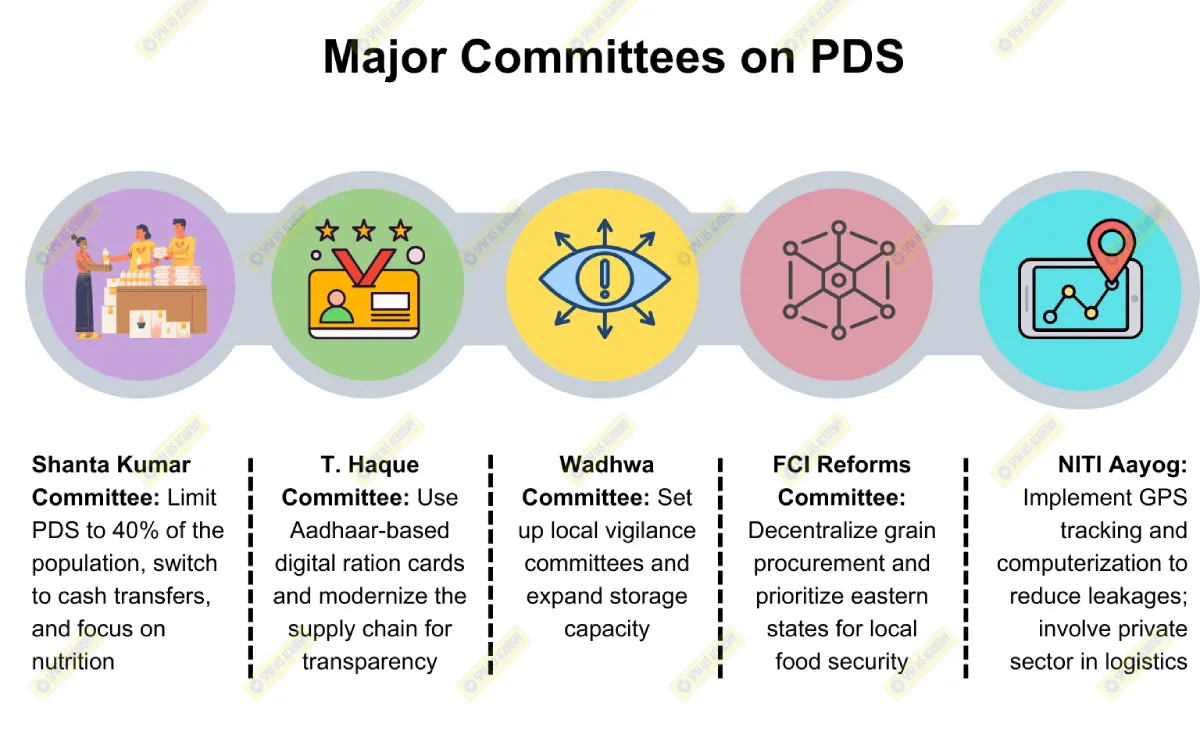
- Leakages in PDS, where grains are diverted from fair price shops into the black market, are a major concern. The Shanta Kumar Committee (2015) reported that 46% of PDS food grains did not reach intended beneficiaries due to pilferage, highlighting significant inefficiencies in the supply chain.
- Diversion impacts food security for vulnerable households, reducing the effectiveness of subsidies in combating hunger and poverty.
2. Identification and Exclusion Errors
- Errors in identifying beneficiaries lead to the inclusion of ineligible households and the exclusion of deserving ones. According to the Economic Survey 2020-21, 20% of eligible households are estimated to be excluded from the PDS.
- These errors arise due to outdated socio-economic data and irregular surveys, causing inequitable access to food grains.
3. Storage and Transportation Issues
- Poor infrastructure for storage and transportation leads to wastage of grains. The Comptroller and Auditor General (CAG) report (2019) noted 14% grain wastage due to inadequate storage facilities, pest infestations, and improper handling.
- This wastage strains government resources and reduces the stock available for distribution, making food security efforts more costly and less effective.
4. Quality and Accountability Issues
- Beneficiaries often receive substandard grains due to lack of accountability in the supply chain. Fair price shops sometimes distribute grains of poor quality, deterring beneficiaries from availing the benefits.
- Additionally, fair price shop dealers may engage in corrupt practices or demand extra charges, reducing transparency and trust in the system.
Government’s Responses to PDS Challenges
1. Technology-Driven Reforms and Aadhaar Integration
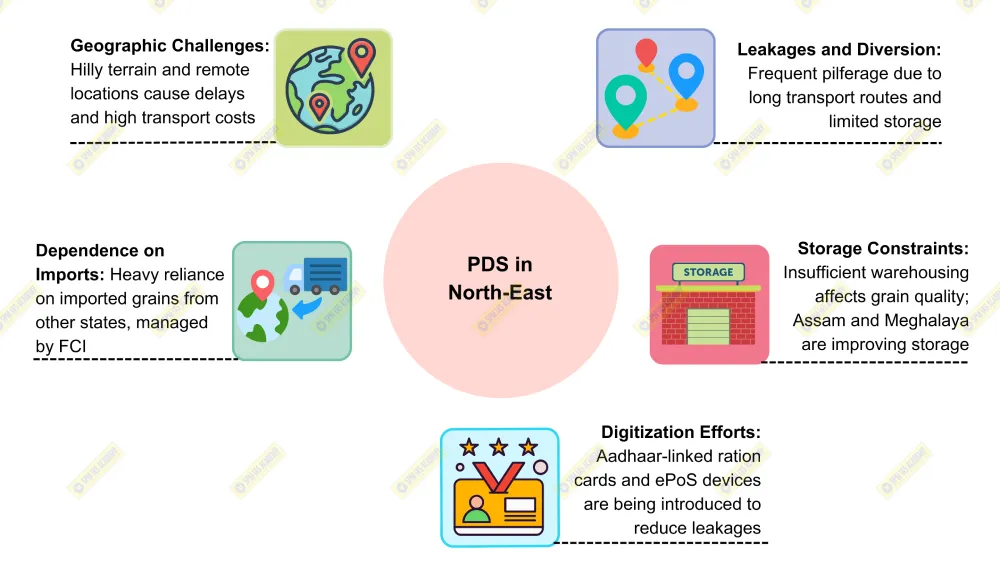
- To address leakages, the government has implemented end-to-end computerization and Aadhaar-based biometric authentication. As of 2023, 93% of PDS transactions are tracked digitally, reducing pilferage and enhancing transparency.
- The One Nation One Ration Card (ONORC) scheme launched in 2019 allows beneficiaries to access PDS benefits across India, a reform that particularly benefits migrant workers and minimizes exclusion errors.
2. Strengthening Storage and Supply Chain Infrastructure
- The Pradhan Mantri Kisan SAMPADA Yojana aims to improve storage infrastructure with an allocation of ₹6,000 crore. This includes building modernized warehouses, cold storage facilities, and food processing units to reduce wastage.
- Partnerships with private sector logistics companies and technology-driven inventory management are being explored to improve transportation efficiency.
3. Use of Data Analytics for Improved Targeting
- The government is leveraging data analytics and machine learning to analyze patterns in PDS usage and ensure better targeting. This helps in regularly updating beneficiary databases and reducing inclusion errors.
- Collaboration with state governments has led to periodic audits of the PDS system to ensure accuracy and responsiveness to current needs.
4. Grievance Redressal Mechanisms and Social Audits
- The government has set up Grievance Redressal Mechanisms and encourages social audits to improve accountability. Mobile apps and helplines now allow beneficiaries to report grievances related to PDS delivery.
- Social audits, promoted by civil society organizations, have been mandated in states like Odisha and Chhattisgarh, improving oversight and ensuring timely delivery.
The PDS continues to be essential for India’s food security framework. While challenges persist, government efforts in digitization, infrastructural enhancement, improved targeting, and increased accountability are vital steps toward making the system more efficient. Ongoing reforms, combined with regular monitoring and adaptation to current needs, can help overcome existing barriers, ensuring that food security reaches all eligible households across India.